WHAT IS AIKIDO
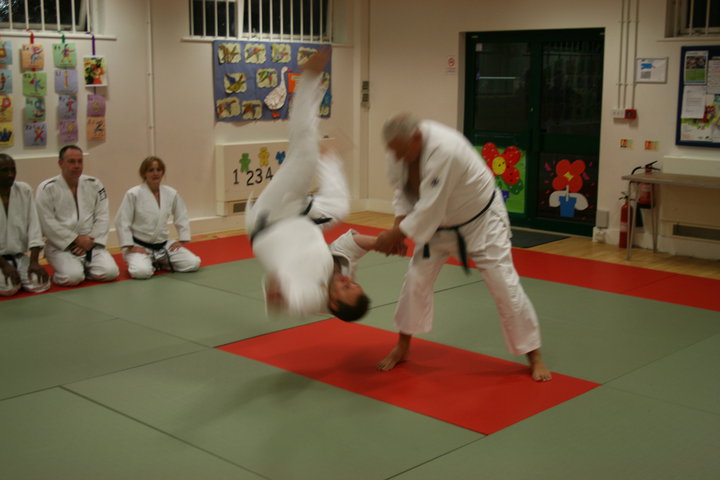
Aikido is a Japanese form of self-defence and martial art that uses locks, holds, throws, and the opponent’s own movements. The principles of Aikido are based on moving to avoid an attack and then restraining the assailant.
The attackers power is used against him and he is controlled to the degree required to neutralise the attack without inflicting undue harm.
WHAT IS AIKIDO
Aikido is a Japanese form of self-defence and martial art that uses locks, holds, throws, and the opponent’s own movements. The principles of Aikido are based on moving to avoid an attack and then restraining the assailant.
The attackers power is used against him and he is controlled to the degree required to neutralise the attack without inflicting undue harm.
WHAT IS AIKIDO
Aikido is a Japanese form of self-defence and martial art that uses locks, holds, throws, and the opponent’s own movements. The principles of Aikido are based on moving to avoid an attack and then restraining the assailant.
The attackers power is used against him and he is controlled to the degree required to neutralise the attack without inflicting undue harm.
There are two main styles of Aikido taught in the UK but both are based on the founder Prof. MoriheiUyeshiba with Prof Kenji Tomiki, a student of Uyeshiba developing a more structured curriculum and introduced some different aspects of Aikido such as competition.
Uyeshiba Akido (Aikikai) is based on ancient traditional methods and relates to a nonaggressive approach with more philosophical and spiritual aspect.
Tomiki Aikido was developed by Prof Kenji Tomiki, a student of Uyeshiba, The style follows the same core principles of the martial art but also develops the practical application and includes a competitive/sporting element, similar to those seen in completive Judo
Tomiki Aikido was introduced into the UK and Europe in the 1960’s by Senta Yamada and his prime student was John Waite who became the first British black belt.
There are two main styles of Aikido taught in the UK but both are based on the founder Prof. MoriheiUyeshiba with Prof Kenji Tomiki, a student of Uyeshiba developing a more structured curriculum and introduced some different aspects of Aikido such as competition.
Uyeshiba Akido (Aikikai) is based on ancient traditional methods and relates to a nonaggressive approach with more philosophical and spiritual aspect.
Tomiki Aikido was developed by Prof Kenji Tomiki, a student of Uyeshiba, The style follows the same core principles of the martial art but also develops the practical application and includes a competitive/sporting element, similar to those seen in completive Judo
Tomiki Aikido was introduced into the UK and Europe in the 1960’s by Senta Yamada and his prime student was John Waite who became the first British black belt.
There are two main styles of Aikido taught in the UK but both are based on the founder Prof. MoriheiUyeshiba with Prof Kenji Tomiki, a student of Uyeshiba developing a more structured curriculum and introduced some different aspects of Aikido such as competition.
Uyeshiba Akido (Aikikai) is based on ancient traditional methods and relates to a nonaggressive approach with more philosophical and spiritual aspect.
Tomiki Aikido was developed by Prof Kenji Tomiki, a student of Uyeshiba, The style follows the same core principles of the martial art but also develops the practical application and includes a competitive/sporting element, similar to those seen in completive Judo
Tomiki Aikido was introduced into the UK and Europe in the 1960’s by Senta Yamada and his prime student was John Waite who became the first British black belt.
COMPETITIVE AIKIDO
The main forms of competition in Aikido are as follows:
KATA
This is a formal presentation of Aikido techniques by two players. A smooth flowing performance demonstrating purpose and understanding combined with movement and co-ordination between both participants is required
NININ DORI
This is a 'free-style’ event with three players, each of whom in turn take the part of the defender against the other two. Players are assessed on variation of technique and attack, speed of performance, general reaction whilst under stress. This event requires considerable stamina and participants have to be extremely fit.
TANTO RANDORI
In this event a player demonstrates his ability to deal with knife attacks. Two players are involved each in turn taking part of the attacker and defender. The defender scores by application of an Aikido technique. The attacker can score by making a positive strike on the target area with the knife.
RANDORI KYOGHI
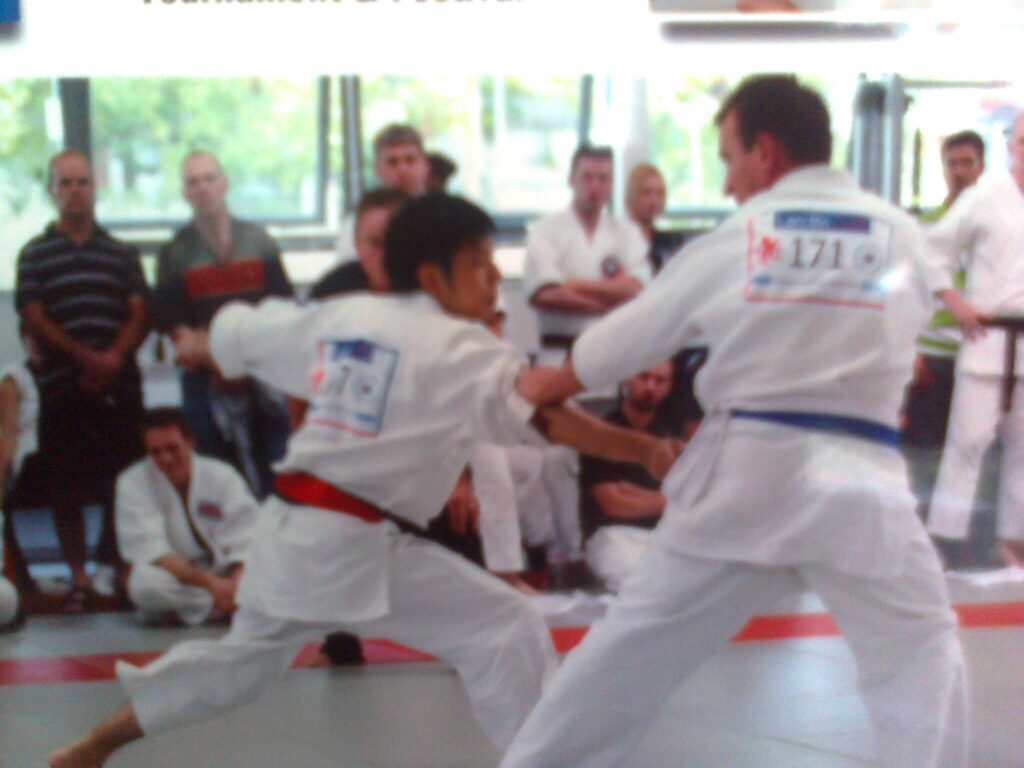
In this event two players compete against each other – unarmed – and attempt to score by applying an Aikido technique. For further information about Aikido and details of your nearest club please contact ⭣
COMPETITIVE AIKIDO
The main forms of competition in Aikido are as follows:
KATA
This is a formal presentation of Aikido techniques by two players. A smooth flowing performance demonstrating purpose and understanding combined with movement and co-ordination between both participants is required
NININ DORI
This is a 'free-style’ event with three players, each of whom in turn take the part of the defender against the other two. Players are assessed on variation of technique and attack, speed of performance, general reaction whilst under stress. This event requires considerable stamina and participants have to be extremely fit.
TANTO RANDORI
In this event a player demonstrates his ability to deal with knife attacks. Two players are involved each in turn taking part of the attacker and defender. The defender scores by application of an Aikido technique. The attacker can score by making a positive strike on the target area with the knife.
RANDORI KYOGHI
In this event two players compete against each other – unarmed – and attempt to score by applying an Aikido technique. For further information about Aikido and details of your nearest club please contact ⭣
COMPETITIVE AIKIDO
The main forms of competition in Aikido are as follows:
KATA
This is a formal presentation of Aikido techniques by two players. A smooth flowing performance demonstrating purpose and understanding combined with movement and co-ordination between both participants is required
NININ DORI
This is a 'free-style’ event with three players, each of whom in turn take the part of the defender against the other two. Players are assessed on variation of technique and attack, speed of performance, general reaction whilst under stress. This event requires considerable stamina and participants have to be extremely fit.
TANTO RANDORI
In this event a player demonstrates his ability to deal with knife attacks. Two players are involved each in turn taking part of the attacker and defender. The defender scores by application of an Aikido technique. The attacker can score by making a positive strike on the target area with the knife.
RANDORI KYOGHI
In this event two players compete against each other – unarmed – and attempt to score by applying an Aikido technique. For further information about Aikido and details of your nearest club please contact ⭣